
When most people think about hiring a relocation provider, they picture desks being loaded onto a vehicle and moved to a new office. While physical transportation is part of the service, it accounts for only a small portion of what a commercial relocation company delivers.

Relocating an office is a major operational project involving staff, IT systems, furniture, suppliers, and multiple stakeholders. Without careful planning and coordination, it can quickly lead to delays, business downtime, and disruption to day-to-day operations.

These issues are why organisations rely on specialist relocation companies to manage the entire relocation process from start to finish. From project management and IT relocation to storage solutions and post-move support, these services can deliver a smooth transition with minimal disruption.

So, what does a commercial relocation company do, and why is it far more than just moving furniture? Let’s take a closer look.

What is a commercial relocation company?

A commercial relocation company specialises in helping organisations move business premises efficiently and safely. Unlike a domestic removals provider, a specialist commercial relocation company understands the complexities involved in moving workplaces, technology, people, and operational infrastructure.

These services can support businesses of all sizes, from a small office with a handful of employees to large corporate relocations involving hundreds or thousands of staff across multiple locations.

Many businesses initially engage an office relocation company to handle the physical move. However, they soon discover that experienced relocation specialists provide much more comprehensive relocation support throughout the entire move.

The goal isn’t simply to move furniture and equipment from one location to another. It’s to minimise disruption, maintain business continuity, reduce business downtime, and ensure the new office is ready for employees from day one.

Strategic planning before the move begins

One of the most valuable aspects of professional relocation services is the planning phase. Before a single item is packed, relocation specialists work closely with stakeholders to understand the organisation’s objectives, timelines, and operational requirements. This planning stage forms the foundation of a successful office relocation process. A detailed relocation plan typically includes:

  • Project timelines and milestones
  • Departmental move schedules
  • Inventory management
  • Risk assessments
  • Budget forecasting
  • Communication strategies
  • Contingency planning

Many businesses underestimate how much coordination is required and how long it takes to plan an office move. Having a structured plan in place helps avoid unnecessary delays and reduces the likelihood of unexpected expenses later in the project.

For larger commercial relocations, planning can begin several months before the physical move takes place. At Universal Commercial Relocation, we are often engaged at this stage to help organisations build realistic relocation plans, identify potential risks, and coordinate the various workstreams that need to come together before moving day.

Dedicated project management throughout the entire relocation

One of the key services offered by a professional office relocation company is dedicated project management. Rather than leaving multiple departments to coordinate suppliers independently, businesses benefit from having just one point of contact who oversees every aspect of the relocation.

A dedicated project manager will typically:

  • Coordinate contractors and suppliers
  • Manage timelines and deadlines
  • Monitor budgets and relocation costs
  • Schedule moving teams
  • Communicate with key stakeholders
  • Identify and resolve potential issues

This level of dedicated project management ensures all moving parts remain aligned throughout the entire relocation.

For businesses with multiple departments, complex logistics, or strict operational requirements, having a dedicated project manager can make all the difference between a smooth transition and a stressful experience.

Office furniture relocation and installation

While moving office furniture remains an important part of commercial moving, it involves much more than just transporting desks and chairs. Professional relocation teams carefully dismantle, transport, and reinstall office furniture according to the agreed office layout in the new space, and can include:

  • Desks and workstations
  • Filing cabinets
  • Storage units
  • Boardroom furniture
  • Reception areas
  • Breakout spaces
  • Collaborative working areas

Furniture installation is often coordinated alongside fit-out projects to ensure employees can begin working immediately upon arrival at the new office. Universal is also able to resize, refurbish or renovate furniture to reduce relocation costs.

Careful planning also helps maximise the efficiency of the new office space while supporting employee productivity and collaboration.

Relocating IT equipment and infrastructure

Modern organisations rely heavily on technology, making IT relocation one of the most critical aspects of any business relocation. Professional office relocation services often include specialist handling of:

  • Servers
  • Network equipment
  • Telecommunications systems
  • Workstations
  • Printers
  • Audio-visual equipment
  • Data storage systems

Sensitive equipment requires specialist packing materials, careful transportation, and technical expertise during disconnection and reconnection.

An experienced office relocation company will work closely with internal IT teams to plan a server relocation and develop a migration strategy that protects systems and helps reduce business downtime.

For organisations operating critical systems, phased relocation programmes may be implemented to ensure minimal disruption during the move.

Managing complex logistics

Commercial relocations frequently involve far more complex logistics than many people expect. Moving offices may require coordination between landlords, building managers, contractors, utility providers, IT specialists, furniture suppliers, and internal departments. In some cases, businesses may need to manage:

  • Restricted building access
  • Lift bookings
  • Parking permits
  • Security clearances
  • Out-of-hours working schedules
  • Multi-site relocations

Professional relocation specialists have extensive experience managing these challenges and coordinating all parties involved. By overseeing the entire process, they help ensure every stage of the relocation runs smoothly and on schedule.

Packing services and inventory management

A successful office move starts with effective organisation. Professional movers often provide comprehensive packing services using specialist packing materials designed to protect office equipment, furniture and sensitive assets during transportation.

Another vital component to any office relocation process is inventory management. Every item can be labelled, tracked, and assigned to specific departments or locations within the new office. This process creates accountability throughout the move and helps prevent items from being misplaced.

For larger commercial relocation projects, digital inventory systems are often used to provide complete visibility over the movement of assets.

This level of control is particularly valuable when relocating specialist equipment or managing multiple departments simultaneously.

Temporary storage solutions and secure storage

Not every relocation happens in a single day. Lease dates, refurbishment schedules, and fit-out works can sometimes create gaps of days or weeks between leaving one office and occupying another. In these situations, temporary storage solutions become essential. Many relocation companies including Universal provide secure storage facilities with 24/7 CCTV coverage that can accommodate:

  • Office furniture
  • IT equipment
  • Filing systems
  • Archive documents
  • Specialist equipment

Secure storage offers flexibility during the relocation process and helps businesses maintain control over their assets as they prepare their new location.

For organisations undertaking phased moves, storage services can also support staged furniture deliveries and equipment installations.

Supporting small businesses and large organisations

The requirements of a small office relocation can differ significantly from those of larger commercial relocations. Small businesses may need straightforward moving services focused on speed and efficiency, while larger organisations often require extensive project management, specialist services, and coordination across multiple departments.

A professional office removals company can adapt its approach to any move based on its scale and complexity. Clients may include:

  • Small businesses
  • Corporate organisations
  • Public sector organisations
  • Educational institutions
  • Healthcare providers
  • Financial services companies

Whatever the business size, the goal stays the same: delivering a smooth transition while minimising operational disruption.

Workplace planning and office layout support

Many businesses view relocation as an ideal opportunity to improve their working environment. Rather than replicating their previous setup, organisations often take the opportunity to optimise how teams work within the new office space. Office relocation specialists can provide guidance on:

  • Effective use of space
  • Department positioning
  • Workflow efficiency
  • Meeting room allocation
  • Storage requirements
  • Collaborative work and breakout areas

A carefully planned office layout can improve productivity, enhance employee experience, and ensure the new office supports both current and future business needs. This strategic input is another example of how relocation support extends well beyond the physical move itself.

We regularly support clients with workplace planning as part of wider relocation projects, helping businesses assess how their teams use space and ensuring the new environment supports both operational requirements and future growth.

Cost control and transparent pricing

One common concern for businesses planning a move is controlling relocation costs. Unexpected expenses can quickly rise when projects aren’t properly planned or managed. Professional relocation companies help businesses maintain cost control through detailed planning, transparent pricing, and accurate forecasting, including:

  • Fixed-price quotations
  • Budget tracking
  • Supplier coordination
  • Resource planning
  • Risk management

By identifying these potential challenges early, businesses can make better decisions and dodge any expensive surprises during the relocation. Transparent pricing also allows organisations to budget confidently and allocate resources appropriately.

Post-move support and ongoing help

The relocation process does not end when the final box arrives at the new office. Post-move support is an important service offered by many office relocation specialists and can help businesses settle into their new space quickly and efficiently. Post move support may include:

  • Furniture adjustments
  • IT troubleshooting
  • Additional equipment installations
  • Storage retrieval
  • Workspace optimisation
  • Issue resolution

Having access to ongoing support helps ensure any problems are addressed quickly before they impact business operations.

This continued partnership can be particularly valuable during the first few weeks following a move when teams are adapting to their new environment.

Why professional relocation services matter

Relocating a business is a significant undertaking that affects people, technology, operations, and productivity. Without proper support, even relatively straightforward office moves can become time-consuming, stressful, and expensive.

Professional relocation teams bring the expertise, resources, and experience needed to manage every aspect of the move effectively. Their role extends far beyond transporting furniture and equipment. They help businesses:

  • Minimise disruption
  • Reduce business downtime
  • Maintain operational continuity
  • Protect valuable assets
  • Control relocation costs
  • Coordinate complex logistics
  • Deliver a smooth transition

For organisations relocating to a new office, partnering with experienced specialists provides reassurance that every detail has been carefully considered and professionally managed.

Why Choose Universal Commercial Relocation?

A successful office relocation requires far more than transporting furniture between buildings. It involves planning, coordination, risk management, and ensuring that people, technology, and operations are ready for the transition.

At Universal Commercial Relocation, we support organisations throughout the entire relocation process, from early planning and project management through to furniture installation and configuration, IT relocation, storage solutions, and post-move support. Our aim is to minimise disruption, maintain business continuity, and help clients move with confidence.

Contact us today for a free quote

More than just moving offices

So, what does a commercial relocation company do? The answer is simple: much more than most businesses realise.

From developing a detailed relocation plan and providing dedicated project management to handling IT infrastructure, furniture installation, storage solutions, and post-move support, a professional office relocation company becomes a trusted partner throughout the entire relocation process.

Whether you’re moving a small office, coordinating a large-scale business relocation, or managing a complex corporate relocation involving multiple departments and locations, the right relocation support can make all the difference.

By working with experienced office relocation specialists, businesses can focus on their people, customers, and day-to-day operations while the experts manage the logistics behind a successful move.

Planning an office relocation?

If your organisation is preparing for a business relocation, Universal Commercial Relocation delivers professional, fully managed commercial relocation services tailored to your requirements. From project planning and office furniture installation, reconfiguration or refurbishing to IT equipment relocation, storage solutions, and post-move support, our experienced team can help deliver a smooth, efficient, and stress-free transition.

Contact us today for a free quote and find out how our experienced office relocation specialists can make your next move faster, smoother, and stress-free.

Frequently asked questions

What does a commercial relocation company actually do?

A commercial relocation company manages the full process of moving a business from one office to another. This includes planning the relocation, packing office assets, transporting furniture and equipment, managing IT relocation, and coordinating installation at the new office. Many also provide project management, storage solutions, and post-move support to ensure minimal disruption and a smooth transition.

How is a commercial relocation company different from an office removals company?

A commercial relocation company provides end-to-end project management, not just physical moving services. While an office removals company focuses on transporting office furniture and equipment, relocation specialists handle planning, IT coordination, office layout setup, inventory management, and business continuity. They are responsible for the entire relocation process, not just the physical move.

How do commercial relocation services reduce business downtime?

Commercial relocation services reduce downtime by planning moves in detail and prioritising critical systems. They use phased relocations, out-of-hours scheduling, and pre-move IT testing to ensure essential services remain operational. Careful coordination with internal teams helps restore systems quickly at the new location and minimise disruption to business operations.

Do commercial relocation companies move IT equipment and servers?

Yes, commercial relocation companies specialise in moving IT equipment, including servers, network hardware, and sensitive infrastructure. This involves secure packing, controlled shutdown procedures, structured cabling, and professional reinstallation at the new site. Many also work alongside IT teams to ensure systems are safely transferred and fully operational after the move.

How far in advance should a business plan a commercial relocation?

Most businesses should plan a commercial relocation 6 to 12 months in advance, depending on size and complexity. Larger corporate moves may require longer. Smaller moves may require less planning, but the earlier workplace relocation specialists are instructed, the greater the level of support and advice they can provide for a seamless relocation project. Early planning allows time for surveys, budgeting, supplier coordination, risk assessments, and phased scheduling, helping ensure a controlled, cost-effective, and low-disruption relocation.
Wondering how to get rid of confidential waste securely in the UK? Proper disposal of sensitive documents like personal data, financial records, and legal papers is essential to prevent data breaches and comply with UK laws. In this guide, we’ll explore the key methods and best practices for handling confidential waste in the UK.

Key Takeaways

  • Managing confidential waste in the UK requires secure disposal methods for personal data, financial records, and legal documents to prevent identity theft and ensure compliance with regulations.
  • Utilising professional shredding services, including on-site and off-site options, is crucial for the secure destruction of sensitive documents and maintaining regulatory compliance in the UK.
  • Implementing a confidential waste disposal policy, which includes staff training and regular audits, is vital for protecting sensitive information and meeting legal obligations such as GDPR compliance in the UK.

Identifying Confidential Waste

Confidential waste encompasses documents containing sensitive information, and improper disposal can lead to identity theft or data breaches. In the UK, getting rid of confidential waste involves managing various types of data, including personal data, financial records, and proprietary information.

An efficient, confidential waste management system ensures compliance with UK regulations and safeguards sensitive information from unauthorised access.

Personal Data

Personal data includes sensitive information such as names, addresses, phone numbers, National Insurance numbers, medical records, employee files, and application forms. Documents containing personal details, whether they belong to employees or clients, need to be shredded to protect privacy and comply with data protection laws like the General Data Protection Regulation (GDPR).

Financial Records

Financial records are another category of sensitive documents that require secure disposal. These consist of bank statements, credit card information, tax returns, and financial reports. These documents offer a detailed view of one’s financial situation. Securely destroying these documents prevents data breaches and unauthorised access to sensitive information.

Legal Documents

Legal documents, such as contracts, litigation materials, and legal correspondence, contain highly sensitive information that must be securely disposed of to prevent unauthorised access. Securely destroying these documents protects confidential information and ensures legal compliance in the UK.

Methods for Secure Disposal of Confidential Waste

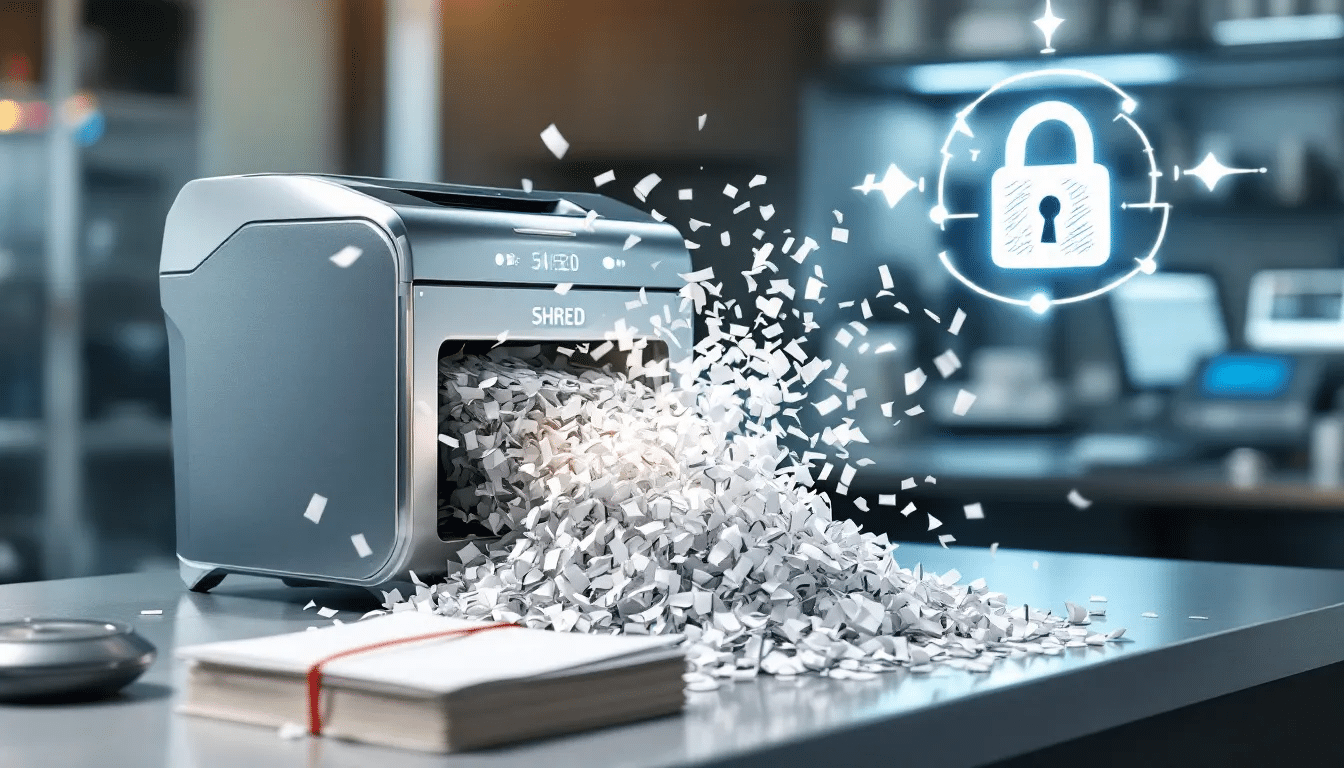
A professional shredding machine in action, securely disposing of confidential waste.

Secure disposal of documents containing confidential information is crucial to protecting sensitive data and ensuring compliance with UK regulations. Various methods can be employed to dispose of confidential waste securely, including shredding, destroying digital media, and using secure bins and containers.

These methods ensure that managing confidential waste is conducted securely and responsibly.

Shredding Paper Documents

Shredding paper documents is one of the most effective methods for protecting sensitive information and preventing unauthorised access. Cross-cut or micro-cut shredders offer higher security than strip-cut shredders, making it harder to reconstruct shredded pieces. For businesses, employing professional shredding services ensures that documents are destroyed securely and in compliance with UK regulations.

Shredding companies or companies such as Universal and its sister company, Information Storage Solutions, that offer Document Destruction Services, often as part of a workplace relocation project, can provide reliable disposal solutions for both personal and office use. They provide various services, including one-time shredding for large volumes of documents and regular collection services for ongoing needs. These services help businesses manage confidential waste effectively and protect sensitive information from unauthorised access.

Destroying Digital Media

Secure destruction of digital media is essential to prevent data breaches. This practice is as important as shredding paper documents. Items such as CDs, USB drives, and hard drives must be destroyed properly to ensure that data cannot be recovered.

Methods for destroying electronic media include degaussing, crushing, and using specialised shredders designed for digital media.

Using Secure Bins and Containers

Lockable and tamper-proof containers prevent unauthorised access to confidential waste. Fire-resistant, regularly emptied bins and containers maintain security.

Lockable cabinets and designated storage areas play a crucial role in securely storing confidential waste until it can be properly disposed of.

Choosing Professional Shredding Services

Shredding services from reputable companies in the UK ensure the secure destruction of confidential documents. These companies offer both on-site and off-site shredding options, providing flexibility and convenience for businesses.

Choosing a shredding company with a solid reputation and reliable references ensures proper disposal of confidential waste.

One-Time Shredding Services

One-time shredding services are designed for UK businesses needing occasional disposal of large volumes of confidential waste. These services can be tailored to meet specific needs, ensuring secure disposal of sensitive information and compliance with data protection regulations.

Utilising one-time shredding services helps businesses manage their confidential waste effectively and avoid potential data breaches.

Regular Collection Services

Regular collection services ensure UK businesses can manage their confidential waste consistently and securely. These services help maintain compliance with data protection regulations and reduce the risk of unauthorised access to sensitive information.

Such services are integral to a comprehensive, confidential waste management strategy.

Alternative Methods for Disposing of Confidential Papers

When shredders are not available, there are alternative methods for disposing of confidential documents to ensure secure disposal. These methods include soaking and pulping, incineration, and manual tearing. While these methods may not offer the same level of security as shredding, they can still be effective in preventing unauthorised access to sensitive information.

Soaking and Pulping

Soaking documents in water turns them into pulp for safe disposal. This method involves placing the papers in water for one to two days until they dissolve into a pulp.

Adding bleach speeds up the process, but always wear protective gloves to avoid accidents.

Incineration

Incineration securely disposes of confidential paper documents, preventing unauthorised access. A designated paper incinerator bin ensures safe burning to destroy paper documents.

Before incinerating documents, it is important to check local regulations to ensure compliance with UK laws governing the burning of waste.

Manual Tearing

Manual tearing or cutting is an inexpensive method for destroying confidential documents when shredders are unavailable. However, it should be considered a last resort, as pieces can still be reconstructed easily, making it less secure than shredding.

However, more secure disposal methods are preferable to ensure confidentiality.

Storing Confidential Waste Securely

Securely storing confidential waste protects sensitive information until proper disposal. UK businesses should contact service providers for secure storage solutions tailored to their needs regarding confidential business waste.

Locked cabinets and designated bin areas maintain organisation and limit potential breaches.

Using Locked Cabinets

Locked cabinets prevent unauthorised access and maintain document confidentiality. Lockable wheelie bins are recommended for securely storing confidential waste. This secure storage method is vital to protect sensitive information from unauthorised access.

Designated Storage Areas

Designated storage areas prevent unauthorised access to confidential waste. Bins, bags, or cabinets storing confidential waste are monitored monthly to maintain security and prevent overflow. Designated storage areas prevent unauthorised access to confidential waste. Monthly monitoring of bins, bags, or cabinets storing confidential waste maintains security and prevents overflow.

Implementing a Confidential Waste Disposal Policy

An office environment implementing a confidential waste disposal policy with visible secure bins.

A confidential waste disposal policy in the UK outlines procedures for handling and disposing of confidential documents. Such a policy mitigates the risk of paper-based security breaches and ensures compliance with data protection regulations.

Employee training on disposal practices and regular audits are crucial components of a robust disposal policy.

Staff Training

Training employees on secure disposal methods ensures compliance and protects sensitive data. Regular training sessions ensure staff understand disposal procedures and the implications of mishandling sensitive data.

Such training sessions maintain a secure and compliant workplace.

Regular Audits

Regular audits ensure compliance with the confidential waste disposal policy. Clear procedures for handling confidential materials and monitoring bin fill levels maintain security.

Regular audits identify gaps in the disposal process and ensure adherence to data protection standards.

Regulatory Compliance and Legal Obligations

Compliance with data protection laws prevents data breaches and protects sensitive information. Regulations such as the GDPR require secure disposal of confidential waste to protect personal data. Adherence to these regulations avoids hefty fines and maintains client and customer trust.

GDPR Compliance

The Data Protection Act and General Data Protection Regulation (GDPR) mandates secure handling and disposal of personal data to prevent data breaches. Fines for breaching GDPR can reach up to 4% of annual worldwide turnover or £17.5 million.

Businesses must implement secure disposal practices to avoid fines and protect sensitive data from unauthorised access.

Avoiding Data Breaches

Preventing data breaches safeguards sensitive information and maintains trust. Secure disposal practices, such as shredding and using secure bins, also prevent unauthorised access to confidential documents.

Ensuring paperwork and e-mails aren’t sent to the wrong recipients and secure storage are essential to prevent unauthorised access and avoid data breaches.

Environmental Considerations in Confidential Waste Disposal

Shredding documents not only protects sensitive information but also supports environmental sustainability by enabling recycling and reducing the carbon footprint. Confidential materials processed at a mill are transformed into new paper products, contributing to natural resource conservation and pollution reduction.

Eco-friendly practices in confidential waste disposal help to rid of confidential waste and reduce environmental impact.

Recycling Shredded Paper

Recycling shredded paper reduces waste and supports sustainability efforts. Choose shredding services with energy-efficient features and recycling capabilities.

Incorporating recycling into waste management enhances environmental responsibility.

Energy Recovery

Energy recovery converts confidential waste into usable energy, an environmentally responsible disposal method. Shredding companies utilise eco-friendly practices to ensure that no waste is sent to landfills. Energy recovery converts confidential waste into usable energy, an environmentally responsible disposal method.

Energy recovery and recycling reduce environmental impact and support sustainable waste management practices.

Summary

In summary, managing confidential waste securely is an essential aspect of protecting sensitive information and complying with data protection regulations. From identifying different types of confidential waste to exploring secure disposal methods and choosing professional shredding services, there are numerous steps involved in ensuring the proper destruction of sensitive documents. Additionally, implementing a confidential waste disposal policy, conducting regular audits, and considering environmental impacts are crucial components of a comprehensive waste management strategy. By following the guidelines outlined in this guide, businesses and individuals can effectively protect their sensitive information and contribute to a sustainable environment.

Frequently Asked Questions

When planning an office move, ensure you consider budgeting, timelines, and communication strategies. This guide on what to consider when planning an office move covers essential factors like IT setup, employee engagement, and post-move activities for a smooth transition.

Key Takeaways

  • Careful planning, including budgeting and communication, is essential for a smooth office move.
  • Involving employees and providing clear updates boosts morale and minimises disruptions during the transition.
  • Testing systems and organising unpacking effectively ensures a seamless settling into the new office environment.

Complete Guide: What to Consider When Planning an Office Move

A team discussing what to consider when planning an office move.

Introduction

This guide provides a checklist for managing an office move effectively, offering comprehensive assistance throughout the process. Office relocation involves strategic planning to avoid disruptions and ensure smooth operations. Businesses gain more productive space, a conducive working environment, and better brand control through moving offices and office moves.

Following this guide will help you navigate the entire process smoothly, from start to finish, with actionable tips and insights on key factors for a successful office move.

Key Factors for a Successful Office Move

Key aspects of a successful office move include timelines, budgets, and communication strategies. Coordination with movers and data security are also critical for a smooth transition.

This guide explores ten key factors that can determine the success of your office relocation.

Timing is crucial. Moving outide office-hours will reduce the impact on daily operations, but may not always be an option. Coordinating logistics with both current and new building managers ensures smooth loading and unloading.

Coordination with movers, suppliers and employees ensures everyone is prepared for moving day. Plan ahead and consider parking availability at both locations to avoid last-minute issues.

Establishing a budget and determining moving needs is the initial step in planning an office move. Clearly outlining expenses helps avoid unexpected costs. Creating a budget plan or using an office budget calculator can assist in estimating move costs.

Obtaining multiple quotes from reputable, suitably-accredited and trade-affiliated moving companies ensures services match your needs and helps manage project costs effectively. Ensuring that your chosen mover holds the British Standard in Commercial Moving (BS 8522) and is a member of the British Association of Removers Workplace Moving Group are good starting points in choosing and appointing your relocation partner.

Effective communication minimises disruptions and fosters teamwork during an office move. A communication plan ensures all stakeholders, including clients and vendors, are informed. Regular updates can reduce employee anxiety and confusion.

Open communication and keeping everyone informed are essential. Collect employee feedback through surveys and meetings to address concerns. Regular updates reduce uncertainty.

Backing up all data prevents loss during the transition. Disconnect and pack computers and servers safely to avoid damage. If you don’t have internal IT staff to carry out these tasks, your workplace relocation partner should be more than able and willing to assist. Checking that your partner holds BS 27001 in Information Security will add peace of mind.

Set up internet and phone services at the new office to ensure network connectivity, maintain seamless operations and safeguard tech equipment.

A thoughtful office layout enhances productivity and supports collaboration. Incorporating collaborative spaces fosters teamwork, and flexible office furniture arrangements optimise space and productivity.

Decluttering and auditing existing space resources is crucial in the initial planning phase. This helps in designing an effective office layout and ensures a smooth transition. Your appointed relocation company should be able to support in space-planning, file-mapping, recycling and disposal of any surplus to requirement items, stationery, furniture and IT equipment.

Your relocation partner should offer comprehensive insurance for your move to meet your needs, but be sure to confirm whether this cost is included or additional to the proposed relocation charge in their quote and that the coverage is sufficient to meet your requirements.

Compliance with building management policies ensures a smooth moving process. Obtaining a full breakdown of rules and adhering to safety regulations reduces risks and ensures legal compliance.

Advance notice for security arrangements ensures safety during the move.

Involving employees increases engagement and support. Designate an in-office moving team to delegate tasks and define roles. Regular meetings allow employees to express concerns.

Employees may need training sessions to adapt to the new setup. Assign team leaders and responsibilities to ensure clear task assignments. Your appointment relocation company will be experienced in liaising with move champions in readiness for a successful move.

An organised packing and labelling system reduces chaos and simplifies unpacking. Clear labelling helps movers handle items correctly, reducing damage risk.

Colour-coding labels improve efficiency by making contents and destinations easier to identify and should be available as part of the project from your relocation partner.

Movers can also assist with packing and unpacking services and materials if required.

Testing all systems and equipment after the move helps identify and resolve issues quickly. A trial run ensures technology and systems function correctly in the new location.

Testing network connectivity, especially for remote work setups, ensures seamless operations.

Your appointed mover should have an in-house IT move team who can assist not only with IT relocation but also associated services such as WEEE recycling, patching, cabling, PAT-testing and FAT-testing.

Creating a Detailed Moving Timeline

An office move timeline should include important dates, milestones, and tasks. Early and detailed planning streamlines the process. A well-organised checklist avoids stress and ensures smooth transitions.

Begin packing non-essential items weeks before the move and use this as an opportunity to declutter, archive paperwork and dispose of redundant kit. Plan logistics and key steps the week before moving day. Ensure employees have access to the timeline to stay informed.

Begin planning your office move at least 6 months before the planned date to ensure adequate preparation. Research potential new locations, relocation partners and create a comprehensive office move checklist to ensure a smooth transition.

Include timelines, budgets, and responsibilities in your detailed office move plan. Early preparations should involve researching and comparing moving companies to find the best options.

Finalise plans, notify stakeholders, and gather packing materials. Ensure proper communication with internal and external parties about the relocation.

Source packing supplies from stores or obtain free boxes from various places or enquire what your relocation partner can provide to assist.

Appointing a mover as early as possible ensures you gain the most benefit and support from your relocation partner.

The larger the move, the earlier they need to be appointed so they assist as early as possibly with project planning.

Prepare essential tasks and finalise logistics. Move non-essential items like plants and bulk supplies beforehand to simplify the moving day. Order keys and employee access cards in advance.

Receiving access cards and keys before moving in ensures a seamless transition.

Managing the Moving Day

A moving truck unloading equipment on moving day.

Ensure everything is prepared for the movers the day before the move. Being well-prepared ensures a smooth transition. Local smaller moves typically can be completed in a day, depending on the circumstances. More complex, larger scale or longer distance moves will require more time.

Safety and security are top priorities during an office move. Obtain a full breakdown of building rules from management. Moving hours may be restricted to non-business hours. Ensure everything goes smoothly to facilitate a successful transition.

Be present at the old office during the move to guide the moving company, manage loading orders, and ensure safety as a project manager. Responsibilities include moderating the move, informing movers about the loading order, and identifying fragile items.

Review the schedule, tasks, arrival time, and item loading order, and address on-site supervision needs with the moving team on a moving day.

Check for left items, document damage, return keys, and (if applicable) confirm lease termination. The decommissioning plan should include cleaning and restoring the office to its original condition, removing cables, fixtures, signs, logos, and furniture, repairing property damage, and replacing burnt-out lightbulbs.

Discuss the decommissioning plan with your moving team early to ensure a smooth process.

Ensure all office spaces are cleaned, organised, and ready for employees. Confirm that necessary supplies, including office materials and stationery, are stocked. Implement a systematic approach to unpacking and organising, prioritising important areas.

Test all newly installed equipment and systems for proper functionality. Provide employee training on safety practices in the new workplace.

Conduct a walk-through of the new office to ensure everything is ready for operations.

Settling into Your New Office Space

Give everything in the office a trial run. Test technology and troubleshoot issues. Check-in with the team, ask for feedback, and maintain morale. Be patient and flexible during the transition. Ongoing support from office relocation specialists is available.

Settling into a new office requires time and patience. A structured approach ensures a smooth transition and creates a positive working environment for your team.

Efficient unpacking and organising reduce downtime and help employees adapt quickly. A systematic packing and labelling approach ensures items are correctly place in their new locations by your movers.

A well-organised unpacking process allows businesses to resume operations quickly. Plan ahead and use packing materials, packing paper, and packing tape to secure items during the move.

Effective communication throughout the move maintains employee morale and keeps everyone informed. Support seamless connectivity for remote employees. Setting up a new workspace can be stressful and tiring for employees.

Appoint ‘Change Champions’ to facilitate communication and support during the transition. This helps maintain company culture and ensures all team members feel valued and supported.

Celebration is in order after completing your office move. Hosting an office warming party is a great way to celebrate a successful office move. Budgeting a small party after the move is a practical way to encourage celebration.

A welcome event after moving helps acknowledge the efforts of employees and fosters a sense of community.

Summary

A successful office move requires careful planning, effective communication, and a well-organised approach. By considering the key factors and following a detailed timeline, you can ensure a smooth transition and create a positive working environment in your new office space. Remember, the journey of an office move is not just about relocating; it’s about embracing change and setting the stage for future growth. Here’s to your successful office move!

Frequently Asked Questions