When an office moves, refurbishes or closes, the redundant furniture, IT and waste has to go somewhere, and where it goes matters. Our office clearance in London removes it responsibly, with re-use and donation considered first, recycling second, and landfill only as a last resort. Every clearance comes with full waste transfer documentation, so your facilities, compliance and procurement teams have a clean audit trail. Office clearance can run as part of a wider office relocation, or as a standalone project.
Below is what each part of the service covers, how office furniture clearance and WEEE recycling in London are handled, and the licensing and reporting that sit behind it.
Office clearance
Office clearance is the controlled removal of everything you are leaving behind: furniture, fittings, IT, storage and general waste. We plan it around your move-out date and your building's access, so the old site is emptied, cleaned of clutter and ready for handover or dilapidations without holding up the rest of your programme.
- Full or partial clearance of offices, floors and multi-site estates
- Scheduled around relocations, refurbishments and lease exits
- Segregation of waste streams on site for the best recovery outcome
- Coordinated with your make-good and lease obligations at the outgoing site
Every clearance starts with a survey so we can measure the volume, identify what can be recovered, and agree the schedule against your move-out or handover date. Waste streams are separated at source, furniture from electricals from confidential material from general waste, because segregation on site is what makes high rates of re-use and recycling possible later. You can request a fixed quote after a site survey, and we clear across London and the South East. See our coverage area.
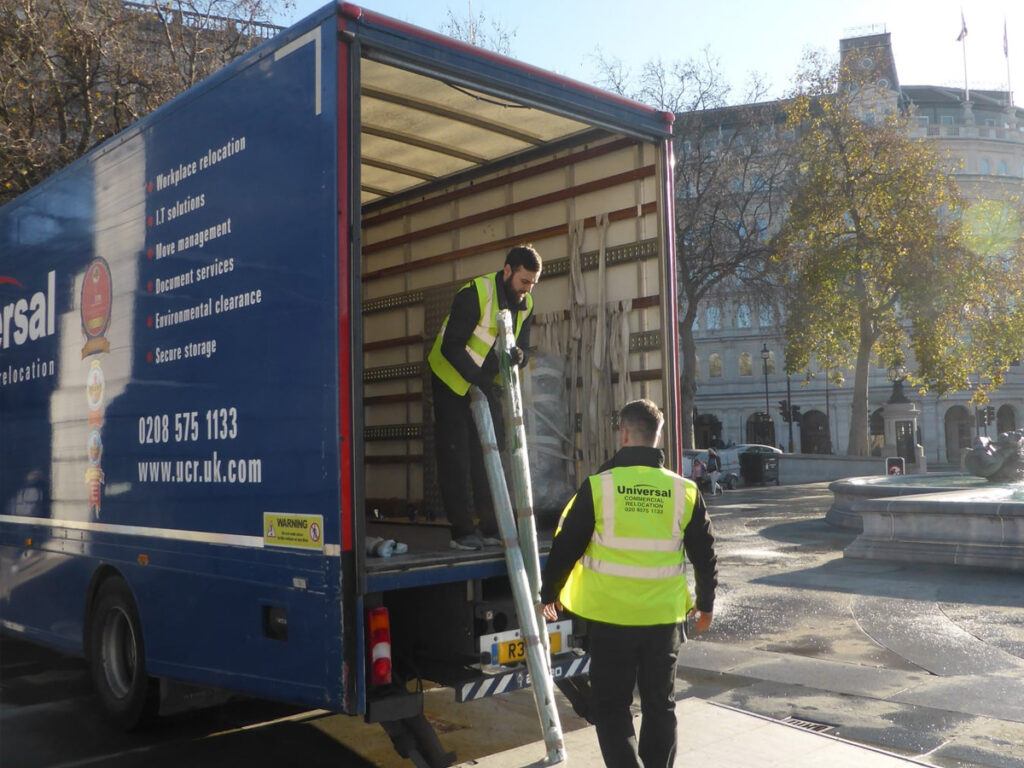
Office furniture clearance and disposal
Office furniture clearance covers desks, chairs, storage, benching, partitions, meeting-room furniture and reception fit-out. We dismantle where needed, remove it cleanly, and route each item to the highest-value outcome rather than straight to a skip. Serviceable furniture is set aside for re-use or donation, damaged items are broken down so their materials can be recycled, and only what genuinely cannot be recovered goes to licensed disposal.
- Dismantling and removal of all office furniture types
- Sorting for re-use, donation, recycling or disposal
- Clear records of what left the site and where it went
This approach keeps office furniture clearance costs and environmental impact down at the same time, because re-use and recycling divert weight away from landfill.
Furniture re-use and donation
The most sustainable outcome for office furniture is a second life, not a recycling plant. Before anything is recycled or disposed of, serviceable desks, chairs and storage are assessed for re-use. Items in good condition can be refurbished for onward use or offered to charities, community groups, schools and social enterprises that can put them to work.
What happens to a re-used desk or chair in practice: it is checked over, cleaned and minor faults are put right, then it is either redeployed within your own estate, passed to a refurbisher who prepares it for resale, or donated to an organisation that can use it. Each of those keeps a usable item in service instead of turning it into waste, and each is recorded so you can see the outcome rather than take it on trust.
Re-use and donation is the top of the waste hierarchy: it avoids the energy and emissions of both disposal and recycling, extends the life of the furniture, and supports organisations that would otherwise buy new. Where furniture is donated, we record where it went, so the social and environmental benefit is documented rather than assumed. This is office furniture recycling in London done in the right order: reduce, re-use, then recycle.

WEEE recycling
Electrical and electronic equipment is controlled waste under the WEEE regulations, and it cannot go in a general skip. Our WEEE recycling in London handles the IT and electricals an office move leaves behind: workstations, monitors, servers, networking kit, printers, phones and small electricals.
- Collection and specialist recycling of IT and electrical equipment in line with WEEE legislation
- Secure handling of any equipment holding data, coordinated with your IT relocation
- Recovery of materials for recycling rather than landfill
- Documentation of weights and outcomes for your records
WEEE recycling matters because electronics contain both hazardous substances that must be kept out of landfill and valuable materials, metals, plastics and rare elements, that can be recovered and put back into manufacturing. Handling it correctly protects the environment and reduces the demand for virgin materials, which is exactly the outcome an office move should be aiming for rather than a skip full of monitors.
Where equipment stores data, secure data destruction is carried out to recognised standards and certificates of destruction are provided where required, so devices are wiped or destroyed before recycling.




Confidential waste
Clearances often surface paper records and media that must be destroyed, not just removed. Confidential paper waste is collected securely and shredded in accordance with BS EN 15713, and electronic media is destroyed to recognised standards, with certificates of destruction issued where required. For a fuller explanation of the options, see our guide on how to get rid of confidential waste.


Licensing, compliance and ESG reporting
Responsible clearance depends on the right licences and paperwork. Universal is a registered Environment Agency waste carrier, and every clearance is handled under a full Duty of Care with documented waste transfer notes, so you have proof that your waste was moved and treated lawfully. Universal is also ISO 14001 accredited and operates an Environmental Management System aligned with clients' corporate social responsibility and environmental policies.
That documentation does more than tick a compliance box. Accurate records of waste weights, recycling and re-use outcomes give your team the data it needs for ESG and sustainability reporting, and evidence of how much was diverted from landfill. Waste audits carried out during move planning identify what can be re-used or recycled before the clearance even starts, so diversion is designed in rather than hoped for.
Landfill diversion is the measure that matters most in a clearance. By working the waste hierarchy in order, re-use first, then recycling, then recovery, and treating landfill as the last resort, the great majority of a typical office clearance can be kept out of the ground. We report the actual weights and destinations for your project rather than quoting a headline figure, so the diversion rate you record is your own, evidenced and defensible.
Office clearance London: frequently asked questions
To clear an office in London responsibly, with re-use and donation considered first and full documentation provided, book a site survey and a fixed quote.