Education and research moves are not ordinary office moves. A library has to arrive in the same order it left, a laboratory is full of sensitive and calibrated equipment, a museum or archive holds items that cannot be replaced, and a university campus has to keep running around the academic calendar. Universal handles all of these across London, with the planning, the specialist handling and the project management each one demands. We already have published education relocations behind us, including at City University London, and this page sets out how we approach each type of move.
Library relocation
The defining challenge of a library move is sequence. A collection is only usable if it stays in classification order, so a library move is really an exercise in moving thousands of items and landing every one in exactly the right place on the new shelves. We plan it shelf by shelf and bay by bay. The existing shelving is mapped, the new shelving is planned to match, and the collection is cleared and reloaded in strict order, so a run that comes off one set of shelves goes back on in the same Dewey or Library of Congress sequence at the other end.
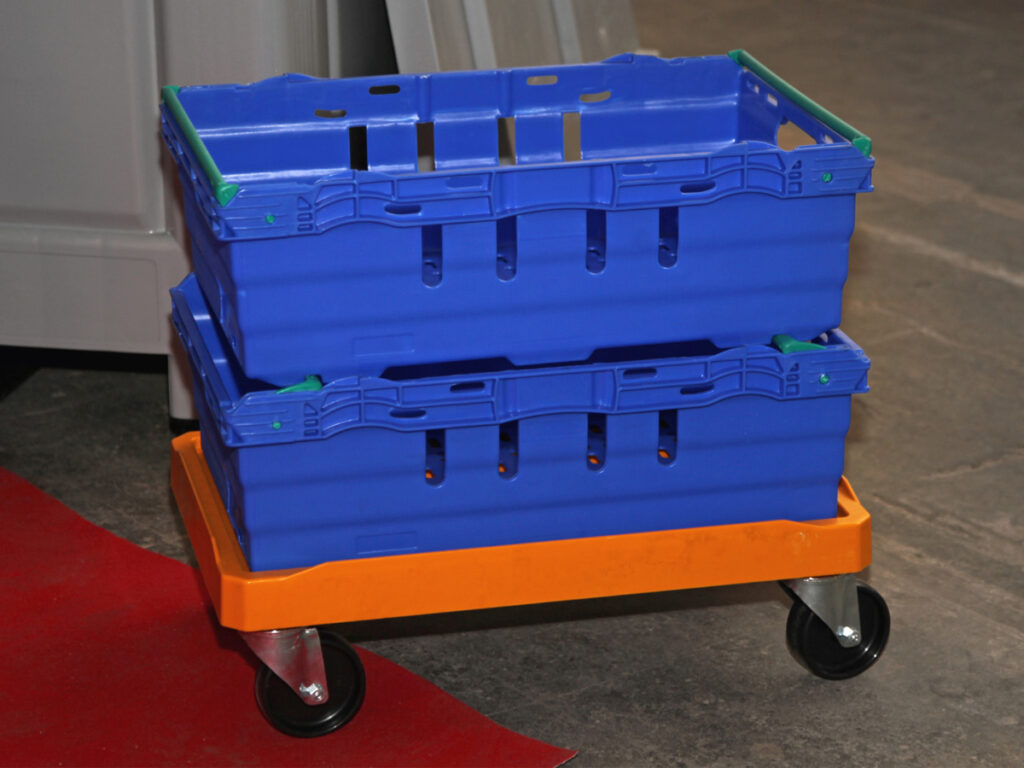
In practice, books are loaded onto numbered book trolleys or into crates in reading order, kept in that order through transport, and reshelved in the same order against a shelving plan, so the sequence is preserved from start to finish and the collection does not need to be re-sorted after the move. That means the library reopens usable, not as a job of work for the library staff. We carried out exactly this kind of sequence-critical move for the City University London Library, which you can read in full on our City University London Library case study. We also handle the shelving itself where a move involves dismantling and reinstalling stacks, and we can hold overflow collections in secure storage during a phased move or refurbishment.
Laboratory relocation
A laboratory move is an equipment move first. Labs are full of sensitive instruments, calibrated equipment, fragile glassware and specialist fittings, and each needs the right handling and protection rather than a general pack. We survey the lab, build an asset list, and plan the decommission, move and recommission of each item, using protective and anti-static packing where the equipment requires it and coordinating the technical decommissioning and recommissioning with your own lab technicians, manufacturers or service engineers so instruments are shut down and brought back up correctly.
Where a lab holds hazardous, regulated or temperature-sensitive materials, those are handled to the institution's own protocols and by the appropriate specialists, and the move is planned around them rather than treating them as ordinary freight. Everything is tracked on the asset list with a chain of custody, so equipment is accounted for from the old bench to the new one. We delivered a move of this kind for the School of Health Sciences at City University, which you can read in our School of Health Sciences case study. Laboratory moves are typically run out of hours or during vacation periods to protect research and teaching, which we plan around from the survey.
Museum and archive relocation
Museum and archive moves are about protecting items that are fragile, valuable or irreplaceable, and about keeping a complete record of what moved and where it went. Collections are condition-checked, packed to suit each item, and moved with a documented inventory and chain of custody so nothing is unaccounted for at any point. Handling, packing and sequencing are planned to the collection, whether that is framed works, objects, specimens or bound volumes, and access and environmental conditions at both ends are factored into the plan.
Archives bring the same sequence and traceability demands as a library, at box level. Records are numbered, mapped and moved so the index stays intact and a given box returns to a known location, which ties directly into our document services for institutions that need files and records tracked throughout. For collections that need to be held between stages, our secure storage keeps them under a single chain of custody rather than handed to a third party.




Campus and university relocation
A university move is rarely one thing. A campus relocation can involve offices, teaching spaces, libraries, laboratories, IT and archives all at once, often across multiple buildings or between campuses, and all of it has to fit the academic calendar. We project-manage campus moves around term dates, concentrating the disruptive work into vacation windows and out-of-hours slots so teaching, exams and research are protected. A named move manager runs the whole programme, with a project plan, a risk register and a communications plan that keeps staff and, where relevant, students informed of what is happening and when.
Because a campus move pulls in every specialism at once, it is coordinated as a single project rather than a series of separate jobs. The library move preserves its sequence, the lab move protects its equipment, the office move keeps departments trading, and the IT is cut over to a plan, all under one schedule. You can read how we structure that on our office move project management page, and see the IT side on our IT relocation page.
Why Universal for education and research moves
We are a commercial relocation specialist with published education relocations behind us, and we have moved London institutions and businesses since 1978. We are ISO 9001 and ISO 14001 certified, CHAS and SafeContractor accredited, members of the British Association of Removers and a multiple BAR Commercial Mover of the Year winner, so the standards, documentation and accountability that universities, colleges and cultural institutions require are already in place. You can see more of our work on the case studies and clients page.
Education and specialist relocation: frequently asked questions
To plan a library, laboratory, museum or university relocation in London, request a survey and a written quote through our relocation service, or get a quote here.