
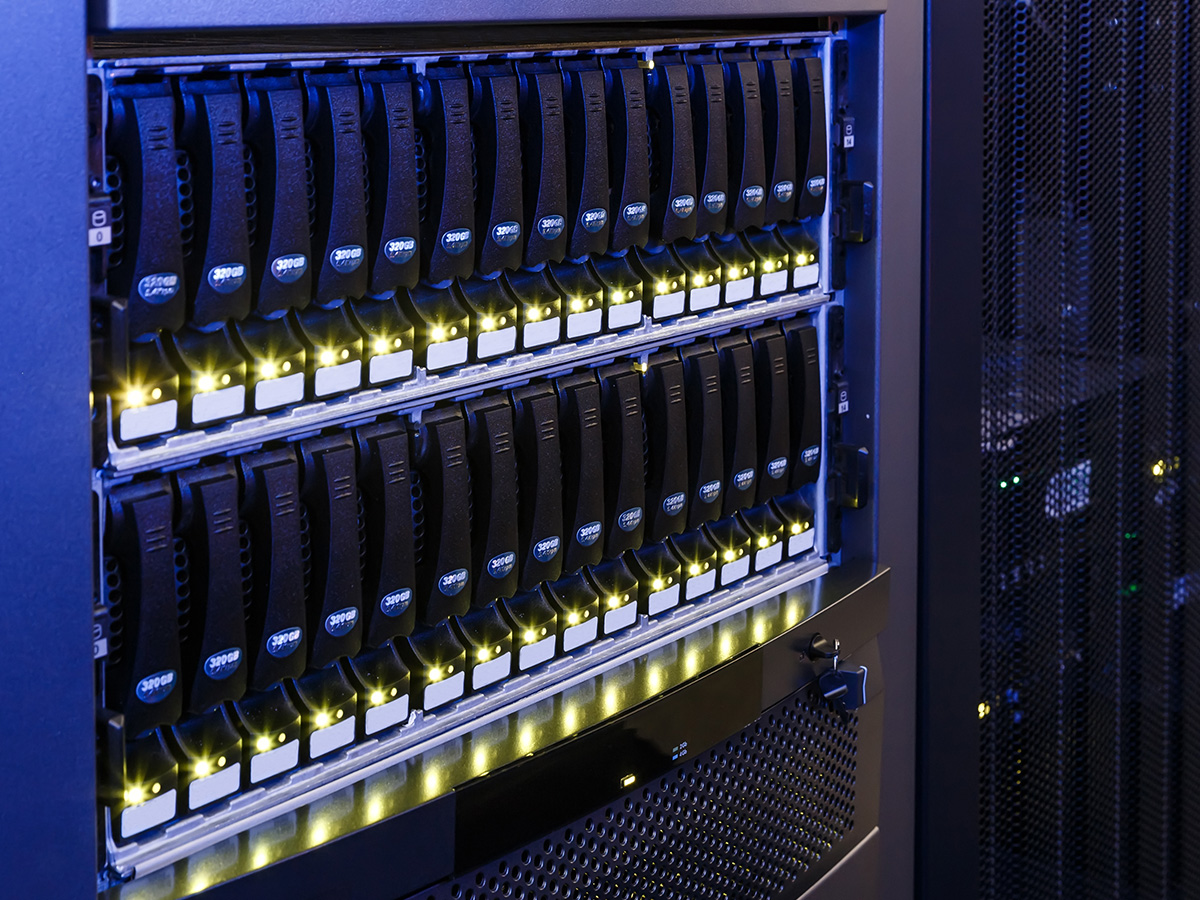
Servers and critical infrastructure are the heart of a business, and any move introduces risk: downtime, data loss or service interruption. Our server and data centre relocation in London is built to remove that risk, with the planning, specialist handling and controlled cutover that mission-critical systems demand. Whether it is a single comms room, a full data centre relocation or a high-availability trading environment, we plan, document and execute the move with full accountability, so your systems come back up cleanly and on schedule.
What we relocate
- Physical servers and server racks
- Network and storage infrastructure
- Data centre and comms room equipment
- Trading floor and high-availability environments

Pre-move audit and dependency mapping
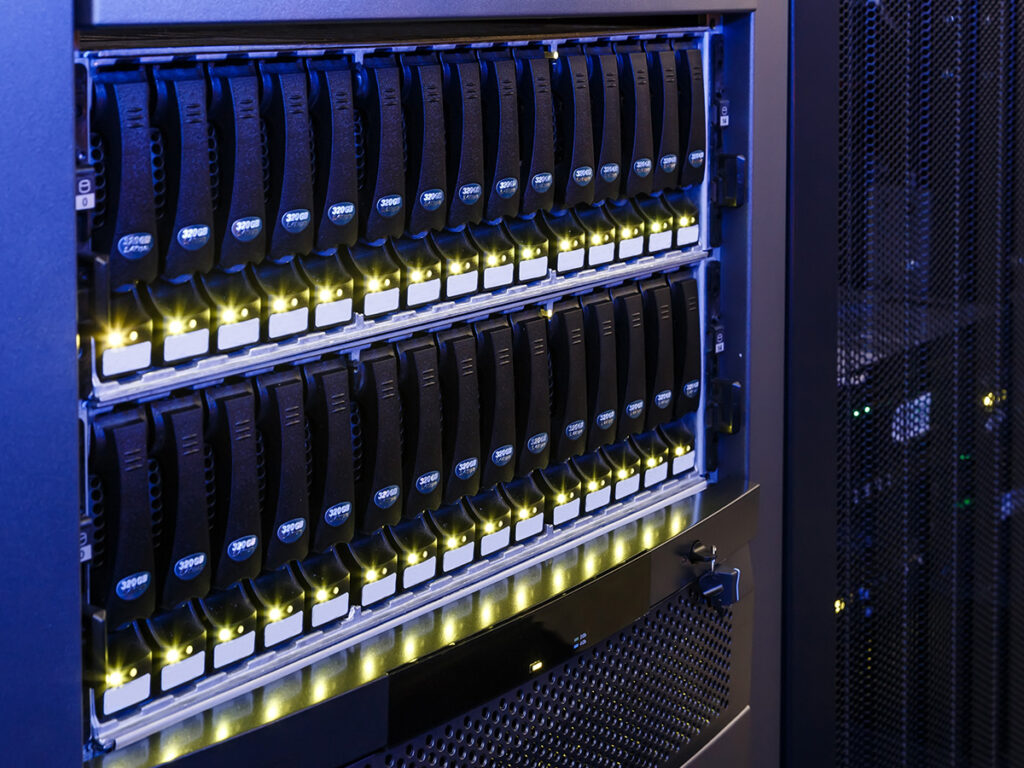
A server move is only as safe as the understanding behind it. We start with a detailed audit of every asset, then map the dependencies between them: which systems talk to which, what powers what, and what has to be live before something else can come back. That dependency map is what sets the order of the cutover, so services are shut down and brought back in a sequence that will actually work, rather than a sequence that looks tidy on paper. Getting this wrong is the most common cause of a move that technically completed but left services broken.Rack and cabinet handling
Racks and cabinets are handled by technicians who do this work specifically. Depending on the equipment and the route, we either move cabinets intact or carry out controlled de-racking and re-racking, with every unit and cable labelled against the audit so it goes back exactly as it came out. Cable management, rack positions and port mapping are recorded before anything is disconnected, so re-racking at the destination follows a known plan and nothing is reconnected by guesswork.Anti-static and shock-monitored transport
Server hardware is sensitive to static, vibration and shock, so transport is treated as part of the risk plan, not an afterthought. Equipment is handled with anti-static precautions, packed and secured to protect it in transit, and moved using specialist equipment and vehicles suited to sensitive loads. Where the equipment warrants it, shock and tilt monitoring on the move gives a record that the hardware was not subjected to damaging forces, so if a device does not power up cleanly at the other end, you know whether transport was a factor.
Power and cooling at the destination
A data centre move fails at the destination if the new environment is not ready for the load. Before the move, we confirm that the destination can actually support the equipment: the power circuits, distribution and any UPS provision, the cooling capacity for the heat the racks will generate, and the physical rack space and access. Confirming power and cooling in advance, rather than discovering a shortfall on cutover night, is one of the most important checks in the whole project.Cutover sequencing and rollback plan
The cutover is planned to the dependency map: the order of shutdown at the old site, the transport, and the order of power-up and reconnection at the new one, scheduled into a window that protects your operations, usually out of hours. Just as important, we plan for the possibility that something does not go as expected. A rollback plan sets out how to return to a known good state if a critical system will not come back cleanly, so a problem on the night is a contained decision rather than an emergency. Planning the way back is what makes it safe to move mission-critical systems at all.Testing and verification
Nothing is signed off on assumption. At the destination, equipment is powered up in sequence, connectivity is checked, and services are verified against the plan before the environment is handed back as live. Any issue is identified and resolved in the window, while the rollback option is still open, rather than discovered by users the next morning.Documentation handed over
You are left with a clear record of what was done. The handover typically includes the updated asset register, rack elevations and positions, cabling and port records, and confirmation of the cutover and testing outcomes. That documentation matters for your own operations and for compliance, and it means the next change to the environment starts from an accurate picture rather than tribal knowledge.




Trading floors and high-availability environments
Some environments cannot tolerate a straightforward shutdown-and-move, because the systems have to stay available. Trading floors, high-availability clusters and business-critical infrastructure need a move plan that works around resilience rather than against it, using the redundancy and failover that already exist so services stay up while the hardware is relocated in a controlled order. These moves are planned in close coordination with your technical teams, because the safest sequence depends on how your specific environment is built. The principle is the same as any server move, understand the dependencies and plan the way back, applied where the tolerance for error is lowest.Server relocation: frequently asked questions
To plan a server or data centre relocation in London, discuss it with us as a standalone project or as part of a full office relocation, and book a site survey and a fixed quote.