
When a business needs space, whether during a move, a refurbishment, or just to clear an overcrowded office, it needs storage it can trust and reach. Our business storage in London is long and short-term commercial storage in a secure, purpose-built facility, for furniture, IT, records, stock and business-critical assets. Everything is inventoried, professionally managed and protected by robust security and fire systems, with collection and delivery arranged around your operation. This is commercial storage built for businesses, not a self-storage unit you visit and manage yourself.
Business storage in London: overview
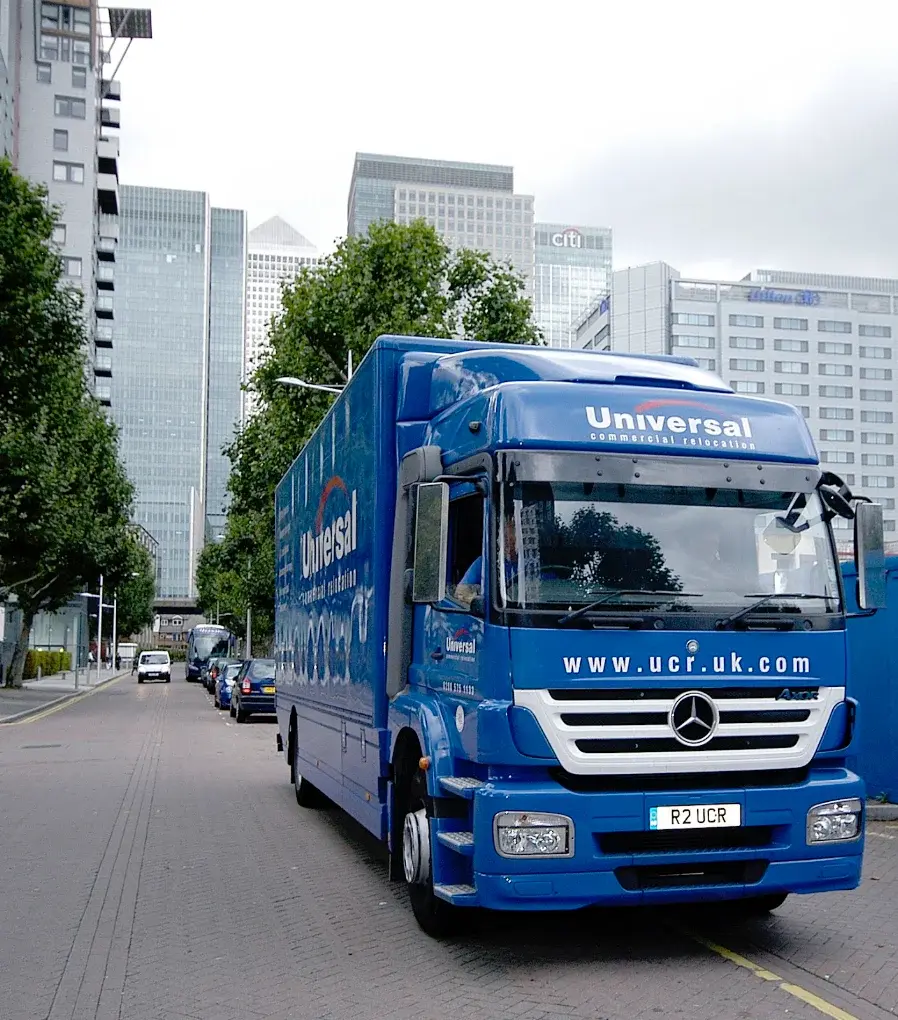
We provide business storage in London for office furniture, IT and equipment, archive records, stock and exhibition kit. Everything is held in our secure, purpose-built facility at our base in Greenford, west London, and collected and delivered by our own crews across London and the South East. The service is commercial only: we store for businesses and organisations, not households.
What we store
Most office storage in London falls into five groups. Each is stored in the way that suits it, containerised or racked, and logged on the same inventory.
- Office furniture. Desks, chairs, storage units, meeting room furniture and partitions, dismantled where needed and protected for storage, ready to be rebuilt in the same layout or a new one.
- IT and equipment. Workstations, monitors, printers, servers and the specialist kit a business relies on. Commercial equipment storage is handled with the same care as the move itself, and every item is logged so it can be returned on its own when you need it.
- Archive boxes and files. Boxed records and files that need to be kept, but not on site. Where you need to find individual files, our document service adds barcode indexing and retrieval at file level.
- Stock and marketing material. Palletised or boxed stock, brochures, signage and display material, racked so it can be picked out and sent where it is needed.
- Exhibition kit. Stands, graphics, display furniture and AV equipment, stored safely between events and delivered back when you need it for the next one.

How storage works
Every storage arrangement follows the same five steps, whether it is a few weeks of overflow or years of archive.
- Survey. We look at what you need to store, how it should be packed and how often you will need to reach it, then give you a written quote. To start, get a quote and we will arrange the survey.
- Inventory. Every item or box is logged on our computerised storage management system before it goes into storage, so you have a searchable record of what is held. Records stored through our document service are barcode indexed at file level.
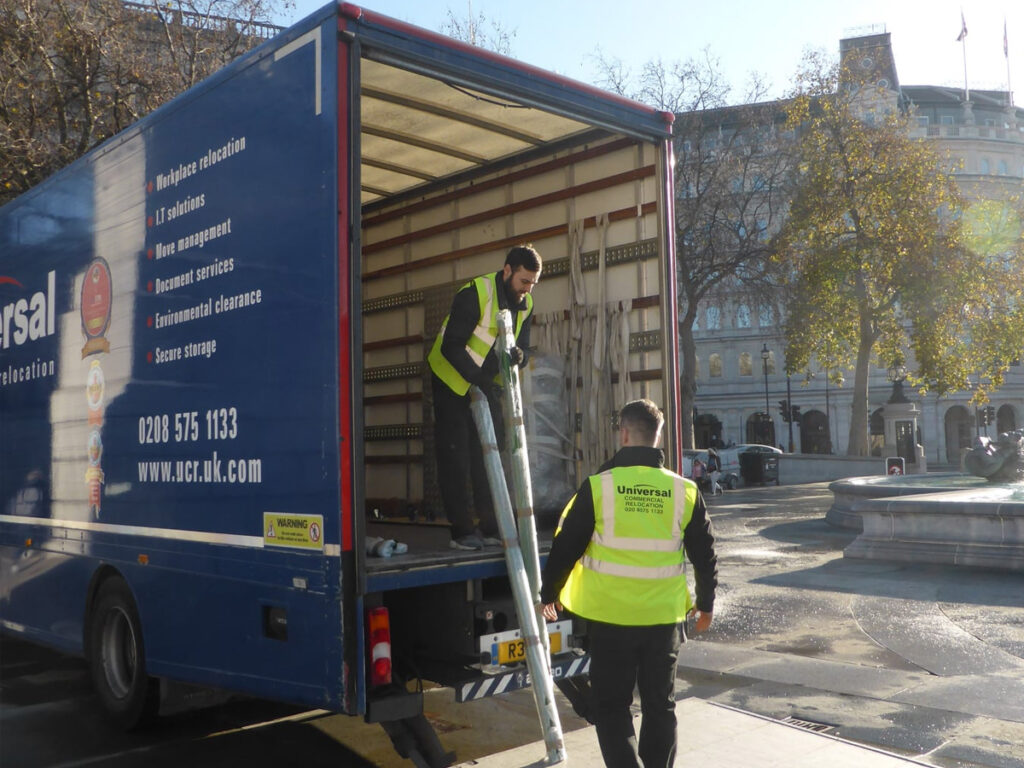
- Collection by our crews. Our own security-vetted crews pack, load and collect from your premises in our secure, liveried and tracked vehicles. Nothing is handed to a third party.
- Access requests. When you need something back, tell us what it is and where it needs to go. Because everything is on the inventory, we can find it and deliver it at short notice, to your office or another site.
- Redelivery. When the storage period ends, we deliver everything back to your current premises or your new office. If it is part of a move, items are placed to the new floor plan rather than left at the door.
Container and racked storage
Storage is containerised or racked to suit what you are storing. Containerised storage keeps your goods in dedicated, sealed units, which is efficient for furniture and mixed office contents and means you pay for the space you fill. Racked storage suits palletised stock, boxed records and items that need to be individually accessible. We match the method to your inventory and how often you will need to reach it, so the storage is efficient rather than one-size-fits-all. It suits office furniture and equipment, IT hardware and infrastructure, archived files and records, and crated or palletised commercial assets.


Inventory management
Everything you store is recorded on a fully computerised storage management system, so your inventory is a searchable record rather than a guess about what is in which container. Every item or box is logged, movements in and out are tracked, and regular documented inspections are carried out in line with Universal's quality and environmental management standards. That gives you visibility and an audit trail, which matters when the goods are business assets rather than spare furniture. For records specifically, our document and archive storage adds barcode indexing and retrieval at file level.
Access arrangements
Business storage is only useful if you can get to your goods when you need them. The facility is secure and staffed, and we provide responsive collection and delivery at short notice using secure, liveried and tracked vehicles, operated by security-vetted warehouse staff. Rather than you making trips to a unit, we bring what you need to where you need it, on an arrangement that fits how your business actually works. Packaging materials, export wrapping and specialist packing are available where required.


Security and compliance
The facility is protected to a standard business assets deserve, available 24 hours a day, 365 days a year:
- CCTV surveillance with NSI Gold accredited intruder alarm systems
- Police-monitored coverage of internal and external access points
- Sensitive smoke detection and BS 5839 fire alarm systems linked to the Fire Brigade
- A BS EN 12845 sprinkler system maintained by an LPCB accredited contractor
These are the protections that separate a purpose-built commercial store from general storage space.
The storage service runs under the same certified management systems as the rest of our work. Universal holds ISO 9001 for quality management, ISO 14001 for environmental management, ISO 27001 for information security and ISO 45001 for occupational health and safety, and is certified to BS 8522, the British Standard for commercial moving services. Our fleet is accredited to FORS Gold, we hold SafeContractor accreditation, and we are a member of the British Association of Removers and its Workplace Relocation Group. ISO 27001 is particularly relevant to storage, because it covers how the records and data held in our care are protected. Full details are on our accreditations page.


Insurance
Stored goods should be covered, not left to chance. Your assets can be insured while in storage, and we will confirm the cover and what it protects so there are no assumptions. Combined with the security and fire systems and the inventory record, insurance means your business-critical assets are protected on every front while they are with us.
Short term commercial storage
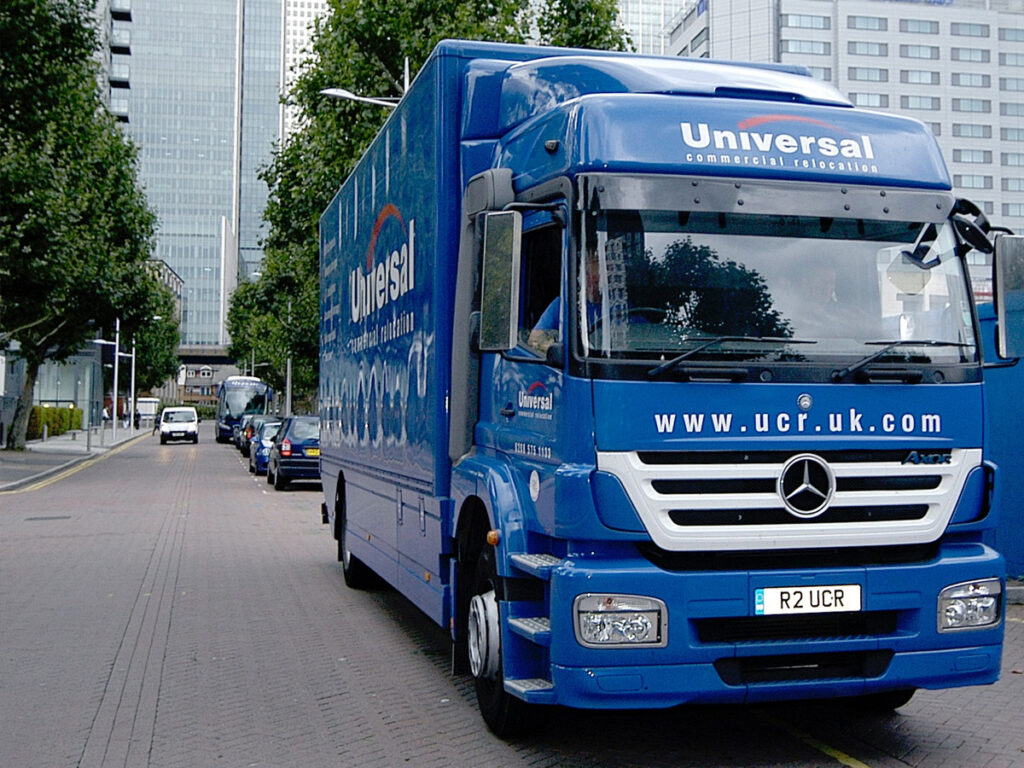
Short term commercial storage is for when you need space for weeks or months and want to hand it back quickly. The most common reasons are a gap between leases, a refit and project overflow. If your old lease ends before the new office is ready, we hold your furniture, IT and files until it is. During a refit or refurbishment, we clear a floor into storage so the work can go ahead, then bring everything back when it is finished. On a project, we take overflow furniture, equipment or stock off your hands until there is room for it. Goods are held in sealed, containerised commercial storage units or on racking, and terms are flexible, so you are not locked into a long commitment for a short need.
Long term business storage
Long term business storage suits the things you need to keep, but not on site. That includes archive boxes and records you are required to retain, surplus furniture you want to keep for future growth, and equipment held between sites while a business consolidates or opens new premises. Moving them out frees up office space, which in London is too expensive to fill with things nobody uses day to day. Everything stays on the inventory and can be delivered back when you need it, and you are not paying short term rates on a long term need. For what drives the price of either option, see our guide to commercial storage costs.
Commercial equipment storage
Storing commercial equipment and specialist stock has its own handling and access considerations, beyond general office contents. For more on the options for storing equipment, see our guide to commercial equipment storage.
Managed business storage versus self-storage
Self-storage puts the work on you: you rent a fixed unit, transport your own goods, and keep your own record of what is inside. Managed business storage does the opposite. We collect and deliver, inventory everything on a computerised system, store it containerised or racked in a purpose-built secure facility, and bring items back when you ask. You are buying a service and an audit trail, not just a locked room. For a business handling furniture, IT and records, that difference shows up as less staff time, better security and a proper record of where every asset is, which is exactly what a fixed self-storage unit cannot give you.

Storage and your move
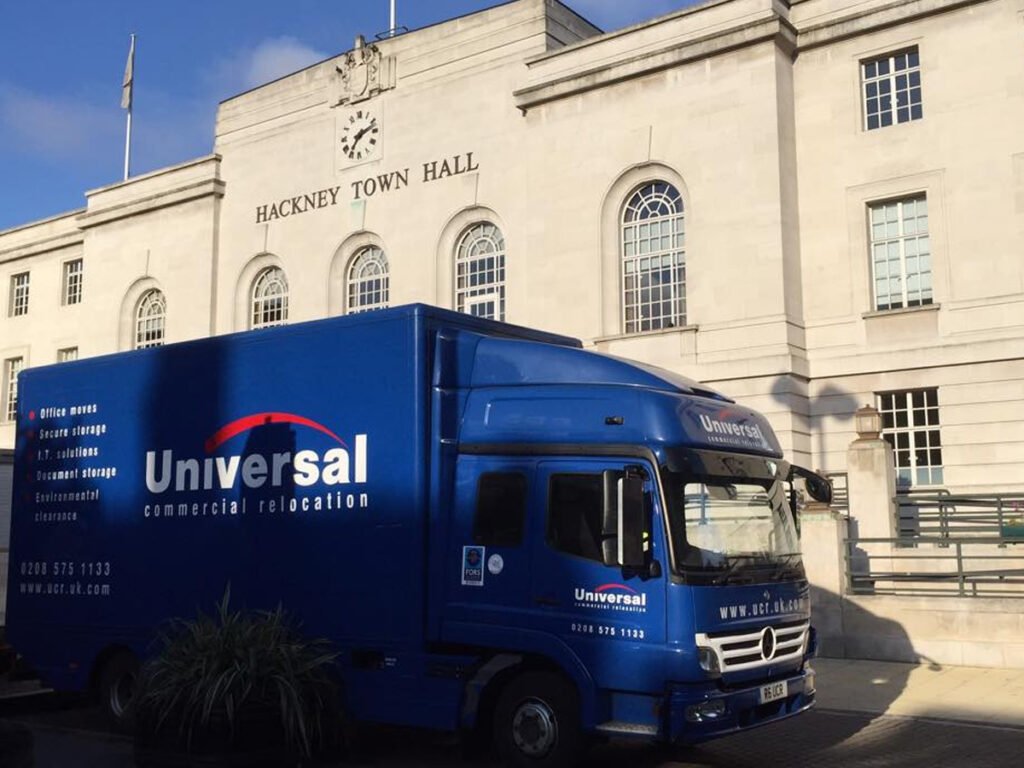
Storage and moving go together. On a phased or multi-site relocation, not everything can arrive at once, so items are held securely and delivered back in a controlled order as each phase is ready. On a refurbishment, a decant lets you clear a floor into storage, have the work done and move back in, without renting a second premises. On the Transport for London project, for example, we stored over 300 desk pedestals during the move to free up space while the work went on. Because we run storage and office relocation in London as one service, the handover between moving and storing is handled by the same team, with a single inventory and a single point of contact. If you are packing with our crate hire, items heading into storage are labelled and logged at the same time, so they come back to the right floor and the right desk.
Business storage: frequently asked questions
To store business assets securely in London, for a move, a refurbishment or ongoing needs, book a survey and a quote.