
- Assessing your current office: measure, observe, and listen
- Clarify what you’re trying to fix before you move anything
- Zone your office using only what you already own.
- Office layout improvement tips that don’t require new furniture
- Designing for hybrid work, acoustics, and wellbeing
- Phasing the reconfiguration to minimise disruption
- When reconfiguration isn’t enough, and relocation becomes necessary
- Step-by-step checklist to reconfigure your office layout
- Why Choose Universal Commercial Relocation?
- Summary
- Frequently Asked Questions
Most UK offices in 2025 can be dramatically improved without purchasing a single new desk or chair. The secret lies in understanding how to reconfigure office layout elements using what you already own, from shifting and rotating to repurposing or resizing existing furniture to create a more productive office layout that genuinely supports how your team works.
If you’ve been staring at the same tired arrangement for years, here’s the good news: meaningful change doesn’t require a sizeable capital expenditure. This guide focuses entirely on reuse, not big refits. You’ll discover practical office space optimisation ideas, learn how to reuse office furniture creatively, and follow a step-by-step reconfiguration process that minimises disruption while maximising results.
Quick wins you can action this week:
- Move underused meeting tables into open areas to create extra hot desking spots for hybrid team members. Flip-top board or meeting tables are a great way to repurpose a space and ensure it is used effectively and efficiently
- Rotate banks of desks to sit perpendicular to windows, giving more people access to natural light
- Convert a spare corner into a quiet focus zone using existing storage units as low dividers
- Relocate printers and tea points away from focused work areas to reduce background noise
Assessing your current office: measure, observe, and listen
In practice, organisations that achieve the most successful reconfigurations often involve an experienced workplace and relocation specialist at the earliest opportunity when considering a move. At Universal Commercial Relocation, we regularly support clients at this point, translating utilisation data and employee feedback into layouts that reuse existing furniture, avoid unnecessary spend, and remain compliant with health, safety, and accessibility requirements.
Reconfiguration begins with a factual audit of the existing layout before any furniture is moved. Without accurate data, you’re simply guessing, and guesswork leads to wasted effort and frustrated teams.
How to measure your space
- Draw a basic floor plan with accurate measurements (graph paper or free tools and apps can help)
- Mark all fixed elements: windows, doors, columns, radiators, power points, data points, and built-in joinery
- Note ceiling heights and any acoustic panels or sound-absorbing panels already in place
- Identify existing walls and any movable walls or movable partitions you can work with
How to observe real usage patterns
- Walk the office during a normal workday – try Tuesday at 11:00 or Thursday at 15:00 for representative snapshots
- Map traffic routes, pinch points, and high traffic zones where people regularly cluster or collide
- Identify underused areas: that corner nobody sits in, the breakout spaces that stay empty, the meeting rooms booked but half-empty
- Note where background noise travels and which quiet areas actually stay quiet
Track utilisation for at least one typical week
- Count empty desks each afternoon
- Record meeting room bookings versus actual attendance
- Monitor which collaborative areas are overbooked and which collaborative zones sit idle
Gather employee feedback
- Run a quick survey (5-10 questions maximum) asking about distractions, lack of personal space, and collaboration bottlenecks
- Consider a 30-minute workshop with representatives from different teams
- Ask specifically about what prevents focused work and deep focus
- Capture suggestions – staff often have practical ideas that cost nothing to implement
Hybrid offices typically see 40-60% desk vacancy rates. Understanding your actual numbers reveals exactly where reconfiguration can reclaim wasted square footage.

Clarify what you’re trying to fix before you move anything
Every reconfiguration should be driven by 3-5 clear objectives, not by aesthetics alone. Moving furniture without purpose disrupts without benefit.
Common reconfiguration aims:
- Adding more collaboration space without losing quiet spaces for deep work
- Improving hybrid-team integration so office days feel worthwhile
- Supporting 2025 growth targets without cramming more desks into the same square foot count
- Making better use of existing meeting rooms that are often booked but under-attended
- Reducing noise complaints and improving employee well-being
Turn vague goals into SMART objectives and outcomes:
- “Reduce noisy complaints in surveys by 30% within three months”
- “Cut internal meeting overruns by improving room suitability”
- “Increase meeting room availability by converting one large room into two smaller spaces”
- “Support video calls without disturbing colleagues in quiet zones”
Align objectives with business priorities:
- How does better space support your talent retention strategy?
- Does your current layout reflect your brand values and company culture?
- Are well-being initiatives undermined by poor air quality, noise, or cramped conditions?
- How will remote working patterns evolve over the next 12 months, and does the layout flex with them?
Spending an hour clarifying objectives saves days of rework later in the design process.
Zone your office using only what you already own.
The concept of zoning means creating distinct areas for different activities – focused work, collaboration, socialising, and circulation – without purchasing new furniture. Activity-based working provides diverse environments for different tasks, and you can implement it using your existing assets.
Office space optimisation ideas for effective zoning:
- Use tall storage units or bookcases as low-level dividers between quiet desks and collaborative workspaces
- Position filing cabinets to create visual cues that signal the boundary between zones
- Group existing desks into team clusters to form “project bays” that support collaboration
- Create small phone-call pods using existing screens, high-backed soft furnishings, or acoustic booths you already own
Separating noise from focus:
- Relocate printers, shredders, and tea points away from areas designated for focused work
- Position call-heavy teams near existing meeting rooms where they can take calls without disturbing others
- Use soft furnishings, rugs, or existing acoustic panels to absorb sound in echo-prone zones
- Consider whether your current layout allows for private conversations without disturbing the wider floor
Circulation and safety considerations:
- Zones must preserve clear routes to fire exits, lifts, and accessible toilets
- Maintain a minimum 1200mm clear width for main circulation routes
- Avoid creating dead ends or blocked sightlines that make navigation confusing
- Keep high traffic zones clear and predictable
Flexible layouts can improve space utilisation from 50% in static setups to 85% when zoning is combined with hot desking and activity-based working principles.
In practice, delivering these changes successfully often depends on having the right expertise in place. We have extensive experience in reconfiguring office furniture and layouts, including dismantling and reassembling desks, relocating components, and resizing or repurposing assets to better meet workspace needs while minimising disruption.
Universal’s team of specialist furniture fitters can support these activities as part of wider optimisation and relocation projects.
Office layout improvement tips that don’t require new furniture
Here’s where you can reuse office furniture creatively. These tactics require zero purchasing – just strategic repositioning of what you already own.
Maximise natural light access
- Rotate desk banks so they run perpendicular to windows rather than parallel
- Move tall storage units away from windows and against internal walls
- Position meeting pods or acoustic booths away from glazing to keep sightlines open
- Avoid placing large furniture where it blocks daylight from reaching the centre of the floorplate
Reuse office furniture in new configurations
- Split one large boardroom table into two smaller project tables for brainstorming sessions
- Convert a little-used meeting room into a mixed-use quiet room with existing furniture
- Use spare tables as hot desking benches, touchdown spots near reception, or laptop bars along window lines
- Repurpose surplus pedestals as printer stands or storage solutions for shared supplies
Create zones with existing assets
- Use redundant screens as acoustic buffers between focused work and collaborative areas
- Rearrange soft seating to create informal meeting areas for casual collaboration
- Stack modular desks differently to create standing-height areas alongside seated workstations
- Position height-adjustable desks (if you have them) in zones where varied postures support productivity
Optimise your meeting rooms
- Convert one oversized room into two smaller spaces using existing furniture as dividers
- Add comfortable seating from unused reception areas to make meeting pods more inviting
- Ensure every meeting space has adequate cable management for laptops and video calls
- Consider whether some meeting rooms would serve multiple purposes better as flexible spaces
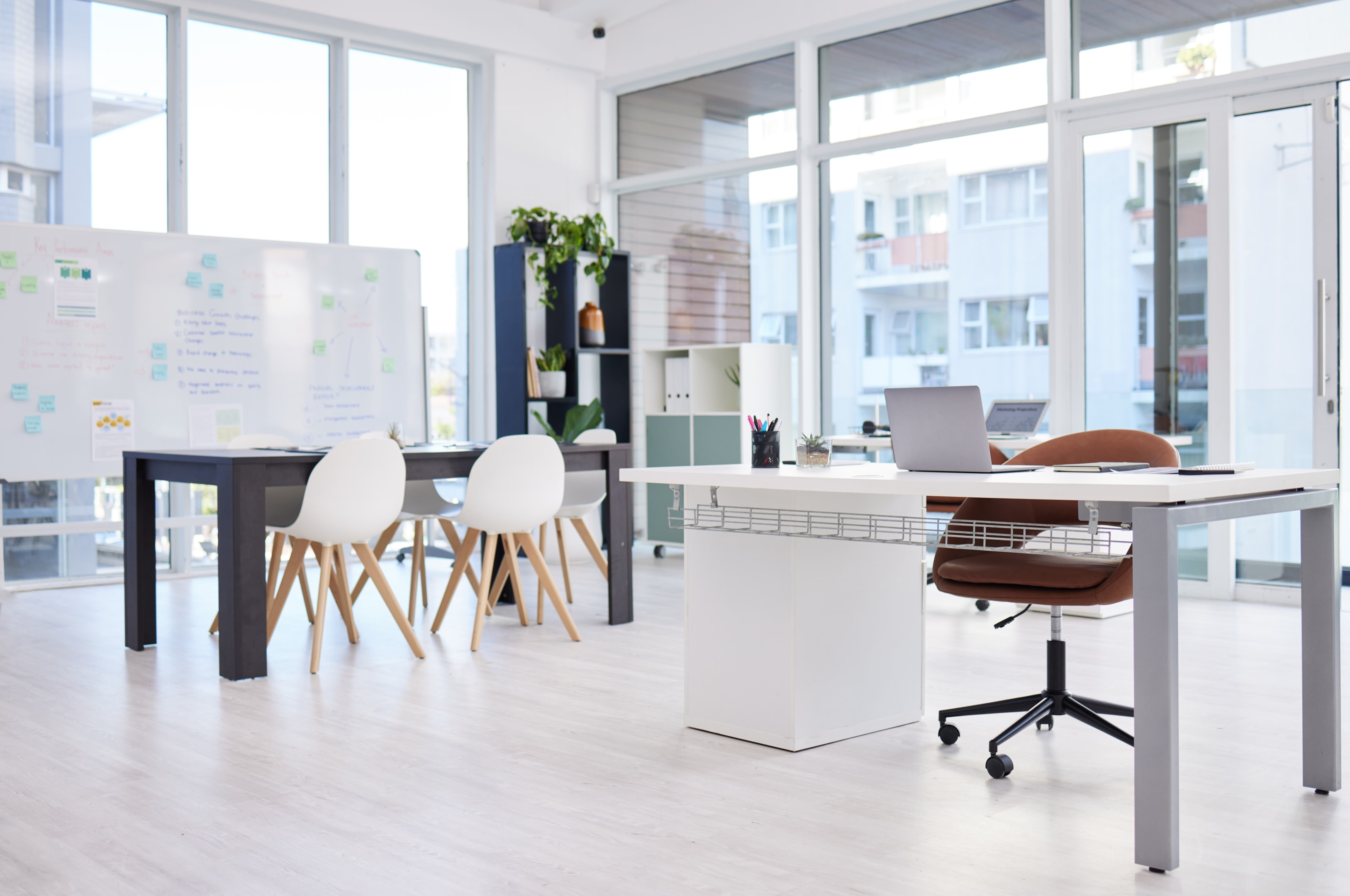
Small changes with big impact:
- Angle desks slightly rather than having rigid rows to create a more dynamic feel
- Move a single bookcase to break up a long row of desks and create breathing room
- Relocate a noisy photocopier to a cupboard or corridor corner
- Clear clutter from breakout spaces so they actually get used
Designing for hybrid work, acoustics, and wellbeing
Reconfigured layouts in 2024-2025 must support hybrid working patterns with fluctuating daily headcount. Static layouts designed for 100% occupancy waste space and frustrate teams who find the office either overcrowded or ghost-like.
Creating desk variety for diverse work styles
- Maintain dedicated desks for core roles that need consistent setups (specialist equipment, ergonomic furniture requirements)
- Create hot desking zones for hybrid team members who attend 2-3 days per week
- Establish touchdown spots for visitors, one-day-a-week staff, or quick drop-ins
- Ensure the new layout provides the right balance between privacy and collaboration
Simple acoustic improvements without construction
- Relocate noisy teams away from staff who need quiet for focused work
- Group call-heavy roles near existing meeting rooms or meeting pods for contained noise
- Position soft seating, rugs, or curtains near hard surfaces that create echo
- Use existing modular furniture as informal sound barriers
Wellbeing considerations
- Ensure clear access to natural light for as many workstations as possible
- Keep sightlines open to windows – seeing daylight supports productivity and mood
- Arrange desks to avoid glare on screens (perpendicular to windows often works best)
- Consider air quality by keeping ventilation routes unobstructed
Accessibility and inclusion
- Keep corridors or walkways at least 1200mm wide for wheelchair users
- Avoid clutter near doorways and circulation routes
- Ensure meeting rooms and shared facilities are accessible without obstacles
- Provide a variety of seating options to accommodate different physical needs
Modern office design trends emphasise flexibility and employee needs over rigid uniformity. The most productive layouts provide choice rather than prescription.
Phasing the reconfiguration to minimise disruption
A phased reconfiguration allows the office to keep operating while layouts change. Attempting to transform everything in one weekend risks chaos, frustration, and hasty decisions that need immediate correction.
Step-by-step reconfiguration process
- Start with a test zone:
- Choose a single department, a bank of 12-16 desks, or one floor in a multi-storey building
- Implement your planned changes in this pilot area only
- Gather data and feedback before rolling changes across the wider new space
- Schedule moves strategically:
- Friday afternoon after 15:00 works well – teams can finish their week and return Monday to the new layout
- Early Monday morning before 08:00, gives staff the weekend to adjust mentally
- Avoid moving furniture during peak work hours when disruption costs productivity
- Plan moves to avoid constant renovations that exhaust staff patience
- Communicate clearly with staff:
- Share floorplan visuals showing before and after arrangements
- Publish a simple timeline so everyone knows what happens when
- Identify a point of contact for questions or issues during the transition
- Explain the rationale – people accept change better when they understand why
- Review and refine the pilot:
- Run the test zone for 2-4 weeks before assessing results
- Gather employee feedback via quick surveys or informal conversations
- Track utilisation data: are the new zones being used as intended?
- Adjust desk placements or zoning based on real usage patterns
- Then roll out progressively:
- Apply lessons from the pilot to subsequent phases
- Move department by department rather than attempting the entire floor at once
- Allow 1-2 weeks between phases for adjustment and refinement
- Expect minor tweaks as different layouts work better for different teams
When reconfiguration isn’t enough, and relocation becomes necessary
Sometimes the existing space simply cannot meet projected headcount, accessibility needs, or tech needs, even after thoughtful optimisation. Knowing when reconfiguration alone isn’t enough saves months of frustration with half-measures.
Signs that reconfiguration won’t be enough:
- Meeting rooms are consistently over-capacity despite creative scheduling
- You cannot create quiet areas without building work due to open floor plans with no acoustic options
- Lease restrictions prevent essential changes like removing existing walls or adding partitions
- The current office lacks sufficient power, data, or infrastructure for modern offices with high technology demands
- Headcount projections exceed what the current square footage can support even with hot desking
When relocation becomes the strategic approach:
- Growth plans require fundamentally different layouts than your current floorplate allows
- The building’s accessibility limitations cannot be addressed without structural changes
- You need space that supports significantly different work styles than the current environment permits
If you’re considering a move as well as a reconfiguration, explore our office relocation services for end-to-end planning, move management, and new layout design.
A strategic approach combines optimisation of your current layout with a realistic assessment of when moving makes more sense than forcing a building to do what it cannot.
Step-by-step checklist to reconfigure your office layout
Use this sequential checklist to guide your reconfiguration project from start to finish:
- Audit and measure – Create an accurate floor plan showing all fixed elements, power points, and circulation routes
- Observe actual usage – Walk the space at different times, noting empty desks, crowded zones, and underused areas
- Gather employee feedback – Run a quick survey asking about distractions, collaboration needs, and quiet space requirements
- Set clear objectives – Define 3-5 measurable goals that tie reconfiguration to business outcomes
- Sketch zoned layouts – Draft 2-3 different layouts showing focus zones, collaborative areas, and circulation paths
- Plan furniture reuse – Identify which existing pieces will move where, using office layout improvement tips from this guide
- Run a pilot zone – Test your best layout option in one area for 2-4 weeks
- Gather pilot feedback – Survey staff and observe utilisation before committing to wider rollout
- Phase the wider rollout – Move department by department, allowing adjustment time between phases
- Review and refine – Assess results after 4-6 weeks and make evidence-based tweaks
Apply these office space optimisation ideas every 6-12 months or after major team changes rather than waiting for problems to accumulate.
Key takeaways for facilities and office managers
- You can significantly reconfigure your office layout without buying new furniture by zoning smartly and reusing what you already have.
- Data-driven assessment of utilisation patterns reveals opportunities invisible to casual observation
- Phasing changes through a pilot zone reduces risk and allows refinement based on real employee feedback.
- Continuous improvement through small, evidence-based adjustments often outperforms expensive one-off refits.
- For complex multi-site or multi-floor projects, specialist relocation and planning support can enhance flexibility and ensure nothing is overlooked.
Why Choose Universal Commercial Relocation?
Reconfiguring an office successfully requires more than moving desks. It requires understanding of how people use space, how furniture can be adapted or resized, and how changes can be implemented without disrupting day-to-day operations.
At Universal Commercial Relocation, we specialise in helping organisations optimise their existing office space before committing to relocation or incurring significant capital expenditure. By auditing utilisation, reconfiguring layouts, and reusing or resizing existing furniture, we help improve productivity, support hybrid working, and avoid unnecessary waste and cost.
Unlike providers focused solely on removals, we regularly support clients who ultimately decide not to move. This consultative approach has helped organisations free up significant space, reduce furniture replacement costs, and extend the life of existing assets while maintaining full operational continuity.
We are independently certified to BS EN ISO 14001:2015 for environmental management and are a licensed upper-tier waste carrier regulated by the Environment Agency. This ensures that reconfiguration, reuse, and any associated relocation activity are delivered responsibly, compliantly, and with a clear focus on sustainability.
Whether the requirement is reconfiguration, phased change, or a full relocation, we provide end-to-end support grounded in practical experience and measurable outcomes.
Summary
Reconfiguring an office layout without purchasing new furniture is entirely achievable when you take a strategic approach grounded in data, clear objectives, and creative reuse of existing assets. By auditing your current space, gathering employee feedback, and zoning for different work styles, you can transform underperforming layouts into environments that support productivity, collaboration, and employee well-being.
The key is to phase changes carefully, test before committing, and treat layout optimisation as an ongoing process rather than a one-time project. Whether you’re adapting to hybrid work patterns, accommodating growth, or simply making better use of your current square footage, the principles in this guide provide a cost-effective path to a more productive office layout that meets your team’s real needs.


